





为什么要做多级缓存
关于缓存的方案一般就是使用缓存中间件redis做缓存。redis的单机qps是万级别的,一般来说,redis已经够用了,没必要再增加其他缓存。我们做多级缓存实际考虑如下
- redis是公用的,可能会有预料之外的异常,比如部分节点不可用,或者集群宕机,这种情况下,是否能不影响产品功能,能不能只部分依赖redis?
- 多级缓存的本质是调和成本和性能的矛盾,最常见的应用就是CPU的多级缓存,比如寄存器—>L1缓存—>L2缓存—>L3缓存,寄存器的大小一般以位作为单位,常见64位或128位,L级别缓存以MB为单位。相比之下我们所说的内存条单位一般为GB更为便宜。放到实际软件上,一般缓存的层级更多,本质是提高访问速度,降低性能损耗开支,常见的ToC平台一般缓存构成为 浏览器缓存—>nginx本地缓存—>redis缓存—>进程缓存—>数据库缓存。
- 多级缓存是一种通用方案,适配的qps范围更加广,肯定会增加开发成本,但是收益可观。
多级缓存的问题
多层缓存会产生一系列问题,我们不考虑把涉及到频繁更新的数据当做缓存,如果必要则需要考虑数据的一致性要求是否很高,以及对应采取怎样的更新缓存策略最为合适。
- 缓存需要分动静态,动态更新的缓存设置淘汰策略,支持更新,静态缓存永远加载在进程内存中,固定值不变。
- 缓存联动更新,数据库更新要同步刷新redis和caffeine,redis更新要更新caffeine。caffeine未命中时如果redis能查询到值要反写到caffeine,本地caffeine缓存更新要广播到其他服务节点。
- 多级缓存有独立的缓存淘汰策略,最大保证缓存的时效一致性。
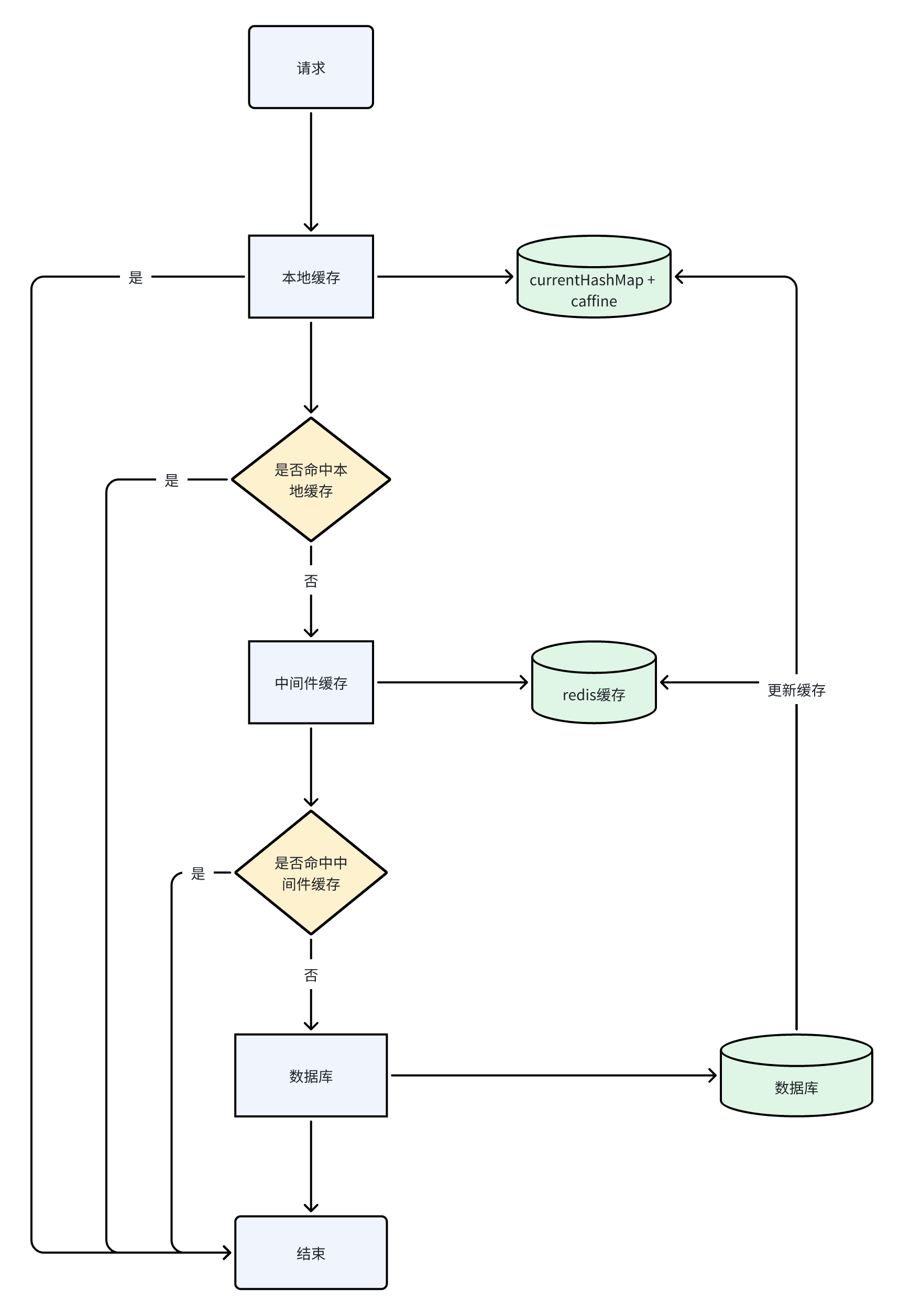
实现原理
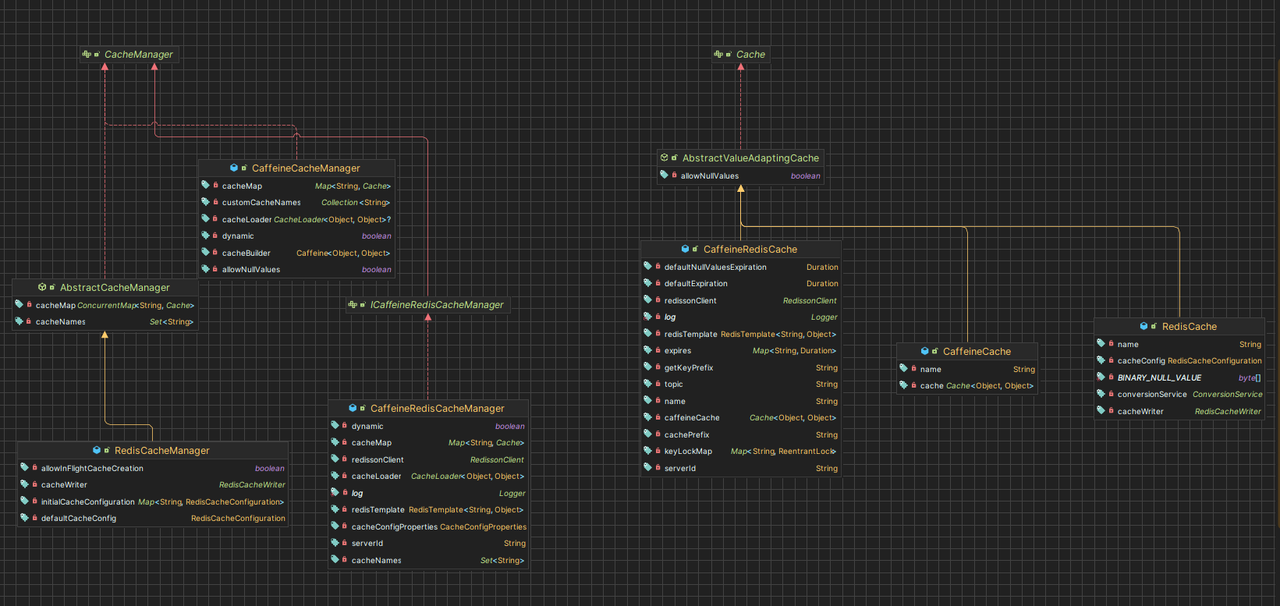
考虑实现的时候,其实是有两种做法,一种是使用自定义切面+自定义注解的方式进行处理,每次请求对标有注解的方法进行拦截,然后通过spel表达式获取到相应结果进行缓存处理。
这种做法比较麻烦,其实还有更好的做法,就是依然使用spring官方的缓存框架spring cache来实现,spring cache的常用注解(@Cacheable,@CacheEvict)等可以不用改变,通过源码解析不难发现,spring cache的做法其实是使用了一个缓存管理器CacheManager然后组合了Cache来实现的,这里的CacheManger和Cache都是接口,官方给我们默认提供了一部分实现,常见的比如Redis和Caffeine等CacheManager和Cache的实现。
CacheManger就是统一管理各种Cache实现的管理器,比如RedisCacheManger主要就是管理RedisCache这一个默认实现,而Caffeine的CacheManager管理了多个Caffeine的Cache实现(private final Map<String, Cache> cacheMap = new ConcurrentHashMap(16)),包括BoundedLocalLoadingCache和UnboundedLocalLoadeingCache。
自定义实现缓存管理器
我们模仿来做的话就是自己实现一个可自由组合多种缓存包括redis和Caffeine的缓存管理器CaffeineRedisCacheManager,使用这个管理器暴露Cache的自定义扩展实现CaffeineRedisCache。
自定义缓存管理器核心方法:
public class CaffeineRedisCacheManager implements ICaffeineRedisCacheManager {

    private Map<String, Cache> cacheMap = new ConcurrentHashMap<>();

    private Set<String> cacheNames;

    private boolean dynamic;

    private CacheConfigProperties cacheConfigProperties;

    private RedissonClient redissonClient;

    private RedisTemplate<String, Object> redisTemplate;

    private CacheLoader<Object, Object> cacheLoader;

    private String serverId;

    public CaffeineRedisCacheManager(CacheConfigProperties cacheConfigProperties, RedisTemplate<String, Object> redisTemplate, CacheLoader<Object, Object> cacheLoader) {
        super();
        this.cacheConfigProperties = cacheConfigProperties;
        this.redisTemplate = redisTemplate;
        this.serverId = cacheConfigProperties.getServerId();
        this.dynamic = cacheConfigProperties.isDynamic();
        this.cacheNames = cacheConfigProperties.getCacheNames();
        this.cacheLoader = cacheLoader;
    }

    @Override
    @SuppressWarnings("unchecked")
    public <K, V> com.github.benmanes.caffeine.cache.Cache<K, V> getCaffeineCache(String name) {
        return (com.github.benmanes.caffeine.cache.Cache<K, V>) getCache(name);
    }

    @Override
    public org.springframework.cache.Cache getCache(@NotNull String name) {

        ReentrantLock lock = new ReentrantLock();
        if (lock.tryLock()) {
            try {
                Cache cache = cacheMap.get(name);
                if (Objects.nonNull(cache)) {
                    return cache;
                }
                if (!dynamic && !cacheNames.contains(name)) {
                    return null;
                }
                cache = createCaffeineRedisCache(name, cacheLoader);
                Cache oldCache = cacheMap.putIfAbsent(name, cache);
                log.info("创建新的缓存实例,名称为===>{}", name);
                return oldCache == null ? cache : oldCache;
            } finally {
                lock.unlock();
            }
        } else {
            log.info("竞争锁失败");
            return null;
        }

    }

    private Cache createCaffeineRedisCache(String name, CacheLoader<Object, Object> cacheLoader) {
        return new CaffeineRedisCache(name, redisTemplate, caffeineCache(cacheLoader), redissonClient, cacheConfigProperties);
    }

    public com.github.benmanes.caffeine.cache.Cache<Object, Object> caffeineCache(CacheLoader<Object, Object> cacheLoader) {
        return caffeineCacheBuilder().build(cacheLoader);
    }
    }
一个是Cache的构造器,另一个是getCache方法,这个方法后续可以扩展多种cache自定义实现,目前来说只组合了Caffeine和Redis。
自定义实现CaffeineRedisCache
然后是自定义Cache的实现CaffeineRedisCache,Cache接口里提供了必要的抽象方法被去实现,比如(lookup,get,put,evict,clear,invalidate)等。
需要对关键方法进行扩展,比如lookup方法的实现为:
@Override
protected Object lookup(@NotNull Object key) {
    Object cacheKey = getKey(key);
    Object value = getCaffeineValue(key);
    if (Objects.nonNull(value)) {
        log.debug("从caffeine获取缓存,获取缓存key===>{}", cacheKey);
        return value;
    }

    value = getRedisValue(key);

    if (Objects.nonNull(value)) {
        log.debug("从redis获取缓存, 缓存key===>{}", cacheKey);
        setCaffeineValue(key, value);
    }
    return value;
}
查找缓存会先从caffeine本地缓存获取,如果获取不到则从Redis缓存获取,如果redis缓存中有但是Caffeine缓存中没有,则将redis缓存的数据存储一份到caffeine缓存当中,如果都没有则返回为空,数据会从数据库读取,并再次存入到缓存中。
putAll方法:
Override
    public void putAll(@NonNull Map<?, ?> map) {
        redisTemplate.executePipelined(new SessionCallback<Object>() {
            @Override
            @SuppressWarnings("unchecked")
            public <K, V> Object execute(@NonNull RedisOperations<K, V> operations) throws DataAccessException {
                ValueOperations<String, Object> valueOperations = (ValueOperations<String, Object>) operations
                        .opsForValue();
                map.forEach((k, v) -> {
                    Object o = toStoreValue(v);
                    Duration expire = getExpire(o);
                    setRedisValue(k, o, expire, valueOperations);
                    setCaffeineValue(k, o);
                });
                return null;
            }
        });
        push(new ArrayList<>(map.keySet()), CACHE_OPERATE_ENUM.BATCH_EVICT);
    }
put相关属于更新方法,会从redis中拿到相关元素后更新本地caffeine缓存,然后通过push方法使用redis的pub/sub广播到其他服务节点,提示其他服务节点同步清空缓存并更新缓存。
pub/sub监听配置:
@Slf4j
@Getter
@RequiredArgsConstructor
public class CacheMessageSubscription implements MessageListener {

    private final RedisSerializer<Object> redisSerializer;

    private final CaffeineRedisCacheManager caffeineRedisCacheManager;

    @Override
    public void onMessage(Message message, byte[] pattern) {
        CacheMessageTO cacheMessageTO = (CacheMessageTO) redisSerializer.deserialize(message.getBody());
        assert cacheMessageTO != null;
        log.info("接收到redis pub/sub 消息===>{}", cacheMessageTO);
        if (!Objects.equals(cacheMessageTO.getServerId(), caffeineRedisCacheManager.getServerId())) {
            log.info("接收到本地缓存更新请求,更新缓存名称==>{},更新操作===>{},更新key===>{}", cacheMessageTO.getCacheName(), cacheMessageTO.getCacheOperate(), cacheMessageTO.getKey());
            caffeineRedisCacheManager.clearLocal(cacheMessageTO.getCacheName(), cacheMessageTO.getKey(), cacheMessageTO.getCacheOperate());
        }
    }
}
这里会判断清理缓存的动作是不是本机发出的,如果是则拒绝重复操作,否则就执行clearLocal方法更新本地caffeine缓存。
clearLocal核心方法:
@SuppressWarnings("unchecked")
    public void clearLocal(String cacheName, Object key, CACHE_OPERATE_ENUM operation) {
        Cache cache = cacheMap.get(cacheName);
        if (cache == null) {
            return;
        }

        CaffeineRedisCache redisCaffeineCache = (CaffeineRedisCache) cache;
        if (CACHE_OPERATE_ENUM.BATCH_EVICT.equals(operation)) {
            redisCaffeineCache.clearLocalBatch((Iterable<Object>) key);
        } else {
            redisCaffeineCache.clearLocal(key);
        }
    }
Redis和Caffeine的缓存淘汰策略
Spring cache的缺点是并不支持动态的指定某些key的缓存过期时间,如果是使用redis做缓存,一般通过注解@Cacheable记录缓存,然后更新缓存通过注解@CacheEvict更新缓存,为了指定redis的缓存过期时间,我这边做了扩展配置,支持根据key分组自定义过期时间(private final Map<String, Duration> expires),这样每个redis的key组是自定义的缓存过期时间,如果不显示设置则默认为无过期时间。
Cafffeine的缓存淘汰策略支持的更多,比如:
expire-after-access: 访问一段时间后过期策略
expire-after-write: 写入一段时间后过期策略
refresh-after-write: 写入一段时间后自动刷新缓存策略
expire-after-access如果一直访问,缓存的时效也会刷新。expire-after-write也是一样如果一直写入缓存时效也会刷新。
除了上面几个常用的缓存淘汰策略之外,caffeine还支持key和value的引用强弱,比如
weak key和value,在jvm垃圾回收时会直接回收caffeine的缓存
soft 只支持value,只有在jvm内存不够用的时候会回收caffeine的缓存
设置核心代码如下:
public CaffeineRedisCache(String name, RedisTemplate<String, Object> redisTemplate, Cache<Object, Object> caffeineCache, RedissonClient redissonClient, CacheConfigProperties cacheConfigProperties) {
    super(cacheConfigProperties.isCacheNullValues());
    this.name = name;
    this.redisTemplate = redisTemplate;
    this.caffeineCache = caffeineCache;
    this.redissonClient = redissonClient;
    this.cachePrefix = cacheConfigProperties.getCachePrefix();
    if (CharSequenceUtil.isNotBlank(cachePrefix)) {
        this.getKeyPrefix = name + ":" + cachePrefix + ":";
    } else {
        this.getKeyPrefix = name + ":";
    }
    this.defaultExpiration = cacheConfigProperties.getRedis().getDefaultExpiration();
    this.defaultNullValuesExpiration = cacheConfigProperties.getRedis().getDefaultNullValuesExpiration();
    this.expires = cacheConfigProperties.getRedis().getExpires();
    this.topic = cacheConfigProperties.getRedis().getTopic();
    this.serverId = cacheConfigProperties.getServerId();
}


public Caffeine<Object, Object> caffeineCacheBuilder() {
        Caffeine<Object, Object> cacheBuilder = Caffeine.newBuilder();
        doIfPresent(cacheConfigProperties.getCaffeine().getExpireAfterAccess(), cacheBuilder::expireAfterAccess);
        doIfPresent(cacheConfigProperties.getCaffeine().getExpireAfterWrite(), cacheBuilder::expireAfterWrite);
        doIfPresent(cacheConfigProperties.getCaffeine().getRefreshAfterWrite(), cacheBuilder::refreshAfterWrite);
        if (cacheConfigProperties.getCaffeine().getInitialCapacity() > 0) {
            cacheBuilder.initialCapacity(cacheConfigProperties.getCaffeine().getInitialCapacity());
        }
        if (cacheConfigProperties.getCaffeine().getMaximumSize() > 0) {
            cacheBuilder.maximumSize(cacheConfigProperties.getCaffeine().getMaximumSize());
        }
        if (cacheConfigProperties.getCaffeine().getKeyStrength() != null) {
            switch (cacheConfigProperties.getCaffeine().getKeyStrength()) {
                case WEAK:
                    cacheBuilder.weakKeys();
                    break;
                case SOFT:
                    throw new UnsupportedOperationException("caffeine 不支持 key 软引用");
                default:
            }
        }
        if (cacheConfigProperties.getCaffeine().getValueStrength() != null) {
            switch (cacheConfigProperties.getCaffeine().getValueStrength()) {
                case WEAK:
                    cacheBuilder.weakValues();
                    break;
                case SOFT:
                    cacheBuilder.softValues();
                    break;
                default:
            }
        }
        cacheBuilder.removalListener((key, value, cause) -> log.debug("缓存失效,key===>{},value===>{},cause===>{}", key, value, cause));
        return cacheBuilder;
    }
核心代码
为了结合caffeine和redis,我对spring cache的抽象适配器做了自定义扩展。
CaffeineRedisCache主要代码:
@Slf4j
@Getter
public class CaffeineRedisCache extends AbstractValueAdaptingCache implements Cache<Object, Object> {

    private final String name;

    private final Cache<Object, Object> caffeineCache;

    private final RedisTemplate<String, Object> redisTemplate;

    private final RedissonClient redissonClient;

    private final String cachePrefix;

    private final String getKeyPrefix;

    private final Duration defaultExpiration;

    private final Duration defaultNullValuesExpiration;

    private final Map<String, Duration> expires;

    private final String topic;

    private final String serverId;

    private final Map<String, ReentrantLock> keyLockMap = new ConcurrentHashMap<>();

    public CaffeineRedisCache(String name, RedisTemplate<String, Object> redisTemplate, Cache<Object, Object> caffeineCache, RedissonClient redissonClient, CacheConfigProperties cacheConfigProperties) {
        super(cacheConfigProperties.isCacheNullValues());
        this.name = name;
        this.redisTemplate = redisTemplate;
        this.caffeineCache = caffeineCache;
        this.redissonClient = redissonClient;
        this.cachePrefix = cacheConfigProperties.getCachePrefix();
        if (CharSequenceUtil.isNotBlank(cachePrefix)) {
            this.getKeyPrefix = name + ":" + cachePrefix + ":";
        } else {
            this.getKeyPrefix = name + ":";
        }
        this.defaultExpiration = cacheConfigProperties.getRedis().getDefaultExpiration();
        this.defaultNullValuesExpiration = cacheConfigProperties.getRedis().getDefaultNullValuesExpiration();
        this.expires = cacheConfigProperties.getRedis().getExpires();
        this.topic = cacheConfigProperties.getRedis().getTopic();
        this.serverId = cacheConfigProperties.getServerId();
    }

    @Override
    public @Nullable Object getIfPresent(@NonNull Object key) {
        ValueWrapper valueWrapper = get(key);
        if (Objects.isNull(valueWrapper)) {
            return null;
        }
        return valueWrapper.get();
    }

    @Override
    public ValueWrapper putIfAbsent(@NotNull Object key, Object value) {
        Object preValue = null;
        RLock lock = redissonClient.getLock((String) key);
        try {
            lock.tryLock(1, 3, TimeUnit.SECONDS);
            preValue = getRedisValue(key);
            if (preValue == null) {
                doPut(key, value);
            }
        } catch (InterruptedException e) {
            log.error("获取分布式锁失败,errMsg===>{}", e.getMessage(), e);
            Thread.currentThread().interrupt();
        } finally {
            lock.unlock();
        }
        return toValueWrapper(preValue);
    }

    protected Object getRedisValue(Object key) {
        return redisTemplate.opsForValue().get(getKey(key));
    }

    @Override
    public @Nullable Object get(@NonNull Object key, @NonNull Function<? super Object, ?> function) {
        return get(key, (Callable<Object>) () -> function.apply(key));
    }

    @Override
    @SuppressWarnings("unchecked")
    public @NonNull Map<@NonNull Object, @NonNull Object> getAllPresent(@NonNull Iterable<@NonNull ?> iterable) {
        GetAllContext context = new GetAllContext((Iterable<Object>) iterable);
        doGetAll(context);
        Map<Object, Object> cachedKeyValues = context.cachedKeyValues;
        Map<Object, Object> result = new HashMap<>(cachedKeyValues.size(), 1);
        cachedKeyValues.forEach((k, v) -> result.put(k, fromStoreValue(v)));
        return result;
    }

    @Override
    @SuppressWarnings("unchecked")
    public @NonNull Map<Object, Object> getAll(@NonNull Iterable<?> keys, @NonNull Function<Iterable<?>, @NonNull Map<Object, Object>> mappingFunction) {
        GetAllContext context = new GetAllContext((Iterable<Object>) keys);
        context.saveRedisAbsentKeys = true;
        doGetAll(context);
        int redisAbsentCount = context.redisAbsentCount;
        Map<Object, Object> cachedKeyValues = context.cachedKeyValues;
        if (redisAbsentCount == 0) {
            // 所有 key 全部命中缓存
            Map<Object, Object> result = new HashMap<>(cachedKeyValues.size(), 1);
            cachedKeyValues.forEach((k, v) -> result.put(k, fromStoreValue(v)));
            return result;
        }
        // 从 mappingFunction 中获取值
        Map<?, ?> mappingKeyValues = mappingFunction.apply(context.redisAbsentKeys);
        putAll(mappingKeyValues);
        Map<Object, Object> result = new HashMap<>(cachedKeyValues.size() + mappingKeyValues.size(), 1);
        cachedKeyValues.forEach((k, v) -> result.put(k, fromStoreValue(v)));
        result.putAll(mappingKeyValues);
        return result;
    }

    @Override
    public void put(@NonNull Object key, Object value) {
        if (!super.isAllowNullValues() && Objects.isNull(value)) {
            this.evict(key);
            return;
        }
        doPut(key, value);
    }

    @Override
    public void putAll(@NonNull Map<?, ?> map) {
        redisTemplate.executePipelined(new SessionCallback<Object>() {
            @Override
            @SuppressWarnings("unchecked")
            public <K, V> Object execute(@NonNull RedisOperations<K, V> operations) throws DataAccessException {
                ValueOperations<String, Object> valueOperations = (ValueOperations<String, Object>) operations
                        .opsForValue();
                map.forEach((k, v) -> {
                    Object o = toStoreValue(v);
                    Duration expire = getExpire(o);
                    setRedisValue(k, o, expire, valueOperations);
                    setCaffeineValue(k, o);
                });
                return null;
            }
        });
        push(new ArrayList<>(map.keySet()), CACHE_OPERATE_ENUM.BATCH_EVICT);
    }

    @Override
    public void invalidate(@NonNull Object key) {
        evict(key);
    }

    @Override
    public void invalidateAll(@NonNull Iterable<@NonNull ?> iterable) {
        Collection<?> keysColl = CollUtil.toCollection(iterable);
        Collection<Object> redisKeys = CollUtil.trans(keysColl, this::getKey);
        redisTemplate.delete(redisKeys.stream().map(Objects::toString).collect(Collectors.toList()));
        push(keysColl, CACHE_OPERATE_ENUM.BATCH_EVICT);
        caffeineCache.invalidateAll(keysColl);
    }

    @Override
    public void invalidateAll() {
        this.clear();
    }

    @Override
    public @NonNegative long estimatedSize() {
        return caffeineCache.estimatedSize();
    }

    @Override
    public @NonNull CacheStats stats() {
        return caffeineCache.stats();
    }

    @Override
    public @NonNull ConcurrentMap<@NonNull Object, @NonNull Object> asMap() {
        return caffeineCache.asMap();
    }

    @Override
    public void cleanUp() {
        caffeineCache.cleanUp();
    }

    @Override
    public @NonNull Policy<Object, Object> policy() {
        return caffeineCache.policy();
    }

    @Override
    protected Object lookup(@NotNull Object key) {
        Object cacheKey = getKey(key);
        Object value = getCaffeineValue(key);
        if (Objects.nonNull(value)) {
            log.debug("从caffeine获取缓存,获取缓存key===>{}", cacheKey);
            return value;
        }

        value = getRedisValue(key);

        if (Objects.nonNull(value)) {
            log.debug("从redis获取缓存,缓存key===>{}", cacheKey);
            setCaffeineValue(key, value);
        }
        return value;
    }

    protected Object getCaffeineValue(Object key) {
        return caffeineCache.getIfPresent(key);
    }

    @NotNull
    @Override
    public Object getNativeCache() {
        return this;
    }

    @SuppressWarnings("unchecked")
    @Override
    public <T> T get(@NotNull Object key, @NotNull Callable<T> valueLoader) {
        Object value = lookup(key);
        if (Objects.nonNull(value)) {
            return (T) value;
        }
        ReentrantLock lock = keyLockMap.computeIfAbsent(key.toString(), s -> {
            log.info("为={}=创建锁", s);
            return new ReentrantLock();
        });

        try {
            lock.lock();
            value = lookup(key);
            if (Objects.nonNull(value)) {
                return (T) value;
            }
            value = valueLoader.call();
            Object storeValue = toStoreValue(value);
            put(key, storeValue);
            return (T) value;
        } catch (Exception e) {
            throw new ValueRetrievalException(key, valueLoader, e.getCause());
        } finally {
            lock.unlock();
        }
    }

    private void doPut(Object key, Object value) {
        value = toStoreValue(value);
        Duration expire = getExpire(value);
        setRedisValue(key, value, expire);

        push(key);

        setCaffeineValue(key, value);
    }

    protected void setCaffeineValue(Object key, Object value) {
        caffeineCache.put(key, value);
    }

    protected void push(Object key) {
        push(key, CACHE_OPERATE_ENUM.EVICT);
    }

    protected void push(Object key, CACHE_OPERATE_ENUM operation) {
        push(new CacheMessageTO(this.serverId, this.name, operation, String.valueOf(key)));
    }

    protected void push(CacheMessageTO message) {
        redisTemplate.convertAndSend(topic, message);
    }

    protected Duration getExpire(Object value) {
        Duration cacheNameExpire = expires.get(this.name);
        if (cacheNameExpire == null) {
            cacheNameExpire = defaultExpiration;
        }
        if ((value == null || value == NullValue.INSTANCE) && this.defaultNullValuesExpiration != null) {
            cacheNameExpire = this.defaultNullValuesExpiration;
        }
        return cacheNameExpire;
    }

    protected void setRedisValue(Object key, Object value, Duration expire) {
        setRedisValue(key, value, expire, redisTemplate.opsForValue());
    }

    protected void setRedisValue(Object key, Object value, Duration expire,
                                 ValueOperations<String, Object> valueOperations) {
        if (!expire.isNegative() && !expire.isZero()) {
            valueOperations.set((String) getKey(key), value, expire);
        } else {
            valueOperations.set((String) getKey(key), value);
        }
    }

    protected Object getKey(Object key) {
        return this.getKeyPrefix + key;
    }

    @Override
    public void evict(@NotNull Object key) {
        redisTemplate.delete((String) getKey(key));
        push(key);
        caffeineCache.invalidate(key);
    }

    @Override
    public void clear() {

        Set<String> keys = redisTemplate.keys(this.name.concat(":*"));
        if (keys != null && !keys.isEmpty()) {
            redisTemplate.delete(keys);
        }
        push((Object) null);
        caffeineCache.invalidateAll();

    }

    public void clearLocal(Object key) {
        log.info("清除本地缓存,缓存key===>{}", key);
        if (Objects.isNull(key)) {
            caffeineCache.invalidateAll();
        } else {
            caffeineCache.invalidate(key);
        }
    }

    public void clearLocalBatch(Iterable<Object> keys) {
        log.info("清除本地缓存, 清除keys===>{}", keys);
        caffeineCache.invalidateAll(keys);
    }

    @SuppressWarnings("unchecked")
    protected void doGetAll(GetAllContext context) {
        context.cachedKeyValues = caffeineCache.getAll(context.allKeys, keyIterable -> {
            Collection<Object> caffeineAbsentKeys = CollUtil.toCollection((Iterable<Object>) keyIterable);
            Collection<Object> redisKeys = CollUtil.trans(caffeineAbsentKeys, this::getKey);
            // 从 redis 批量获取
            List<Object> redisValues = redisTemplate.opsForValue().multiGet(redisKeys.stream().map(Object::toString).collect(Collectors.toList()));
            Objects.requireNonNull(redisValues);
            // 统计 redis 中没有的 key 数量
            int redisAbsentCount = 0;
            for (Object value : redisValues) {
                if (value == null) {
                    redisAbsentCount++;
                }
            }
            context.redisAbsentCount = redisAbsentCount;
            HashMap<Object, Object> result = new HashMap<>(caffeineAbsentKeys.size() - redisAbsentCount, 1);
            boolean saveCacheAbsentKeys = context.saveRedisAbsentKeys;
            if (saveCacheAbsentKeys) {
                // mappingFunction 的参数
                context.redisAbsentKeys = new HashSet<>(redisAbsentCount);
            }
            int index = 0;
            for (Object key : caffeineAbsentKeys) {
                Object redisValue = redisValues.get(index);
                if (redisValue != null) {
                    result.put(key, redisValue);
                } else if (saveCacheAbsentKeys) {
                    context.redisAbsentKeys.add(key);
                }
                index++;
            }
            return result;
        });
    }

    protected static class GetAllContext {

        public GetAllContext(Iterable<Object> allKeys) {
            this.allKeys = allKeys;
        }

        protected Iterable<Object> allKeys;

        /**
         * 是否将redis未查询到的key保存到 {@link #redisAbsentKeys}
         */
        protected boolean saveRedisAbsentKeys = false;

        /**
         * redis中未查询到的key
         */
        protected Set<Object> redisAbsentKeys;

        /**
         * redis中未查询到的key数量
         */
        protected int redisAbsentCount;

        /**
         * caffeine和redis中缓存的键值,未经过{@link #fromStoreValue}转换
         */
        protected Map<Object, Object> cachedKeyValues;

    }
}
缓存管理器CaffeineRedisCacheManager扩展实现:
@Slf4j
@Data
public class CaffeineRedisCacheManager implements ICaffeineRedisCacheManager {

    private Map<String, Cache> cacheMap = new ConcurrentHashMap<>();

    private Set<String> cacheNames;

    private boolean dynamic;

    private CacheConfigProperties cacheConfigProperties;

    private RedissonClient redissonClient;

    private RedisTemplate<String, Object> redisTemplate;

    private CacheLoader<Object, Object> cacheLoader;

    private String serverId;

    public CaffeineRedisCacheManager(CacheConfigProperties cacheConfigProperties, RedisTemplate<String, Object> redisTemplate, CacheLoader<Object, Object> cacheLoader) {
        super();
        this.cacheConfigProperties = cacheConfigProperties;
        this.redisTemplate = redisTemplate;
        this.serverId = cacheConfigProperties.getServerId();
        this.dynamic = cacheConfigProperties.isDynamic();
        this.cacheNames = cacheConfigProperties.getCacheNames();
        this.cacheLoader = cacheLoader;
    }

    @Override
    @SuppressWarnings("unchecked")
    public <K, V> com.github.benmanes.caffeine.cache.Cache<K, V> getCaffeineCache(String name) {
        return (com.github.benmanes.caffeine.cache.Cache<K, V>) getCache(name);
    }

    @Override
    public org.springframework.cache.Cache getCache(@NotNull String name) {

        ReentrantLock lock = new ReentrantLock();
        if (lock.tryLock()) {
            try {
                Cache cache = cacheMap.get(name);
                if (Objects.nonNull(cache)) {
                    return cache;
                }
                if (!dynamic && !cacheNames.contains(name)) {
                    return null;
                }
                cache = createCaffeineRedisCache(name, cacheLoader);
                Cache oldCache = cacheMap.putIfAbsent(name, cache);
                log.info("创建新的缓存实例,名称为===>{}", name);
                return oldCache == null ? cache : oldCache;
            } finally {
                lock.unlock();
            }
        } else {
            log.info("竞争锁失败");
            return null;
        }

    }

    private Cache createCaffeineRedisCache(String name, CacheLoader<Object, Object> cacheLoader) {
        return new CaffeineRedisCache(name, redisTemplate, caffeineCache(cacheLoader), redissonClient, cacheConfigProperties);
    }

    public com.github.benmanes.caffeine.cache.Cache<Object, Object> caffeineCache(CacheLoader<Object, Object> cacheLoader) {
        return caffeineCacheBuilder().build(cacheLoader);
    }

    @NotNull
    @Override
    public Collection<String> getCacheNames() {
        return this.cacheNames;
    }

    public void clearLocal(String cacheName, Object key) {
        clearLocal(cacheName, key, CACHE_OPERATE_ENUM.EVICT);
    }

    @Override
    public void clearAll(String cacheName) {

        Cache cache = cacheMap.get(cacheName);
        if (cache == null) {
            return;
        }
        CaffeineRedisCache redisCaffeineCache = (CaffeineRedisCache) cache;
        redisCaffeineCache.clear();

    }

    @SuppressWarnings("unchecked")
    public void clearLocal(String cacheName, Object key, CACHE_OPERATE_ENUM operation) {
        Cache cache = cacheMap.get(cacheName);
        if (cache == null) {
            return;
        }

        CaffeineRedisCache redisCaffeineCache = (CaffeineRedisCache) cache;
        if (CACHE_OPERATE_ENUM.BATCH_EVICT.equals(operation)) {
            redisCaffeineCache.clearLocalBatch((Iterable<Object>) key);
        } else {
            redisCaffeineCache.clearLocal(key);
        }
    }

    public Caffeine<Object, Object> caffeineCacheBuilder() {
        Caffeine<Object, Object> cacheBuilder = Caffeine.newBuilder();
        doIfPresent(cacheConfigProperties.getCaffeine().getExpireAfterAccess(), cacheBuilder::expireAfterAccess);
        doIfPresent(cacheConfigProperties.getCaffeine().getExpireAfterWrite(), cacheBuilder::expireAfterWrite);
        doIfPresent(cacheConfigProperties.getCaffeine().getRefreshAfterWrite(), cacheBuilder::refreshAfterWrite);
        if (cacheConfigProperties.getCaffeine().getInitialCapacity() > 0) {
            cacheBuilder.initialCapacity(cacheConfigProperties.getCaffeine().getInitialCapacity());
        }
        if (cacheConfigProperties.getCaffeine().getMaximumSize() > 0) {
            cacheBuilder.maximumSize(cacheConfigProperties.getCaffeine().getMaximumSize());
        }
        if (cacheConfigProperties.getCaffeine().getKeyStrength() != null) {
            switch (cacheConfigProperties.getCaffeine().getKeyStrength()) {
                case WEAK:
                    cacheBuilder.weakKeys();
                    break;
                case SOFT:
                    throw new UnsupportedOperationException("caffeine 不支持 key 软引用");
                default:
            }
        }
        if (cacheConfigProperties.getCaffeine().getValueStrength() != null) {
            switch (cacheConfigProperties.getCaffeine().getValueStrength()) {
                case WEAK:
                    cacheBuilder.weakValues();
                    break;
                case SOFT:
                    cacheBuilder.softValues();
                    break;
                default:
            }
        }
        cacheBuilder.removalListener((key, value, cause) -> log.debug("缓存失效,key===>{},value===>{},cause===>{}", key, value, cause));
        return cacheBuilder;
    }

    protected static void doIfPresent(Duration duration, Consumer<Duration> consumer) {
        if (duration != null && !duration.isNegative()) {
            consumer.accept(duration);
        }
    }
}
CaffeineRedisCacheManager作为Spring Cache Manager的新增扩展实现,作为spring唯一bean注入。
最后使用autoconfig自动注入即可。
具体使用是无感的,只需要@EnableCache Spring Cache自带的注解即可.
自动配置类:
@AutoConfiguration(after = RedisAutoConfiguration.class)
@EnableConfigurationProperties(CacheConfigProperties.class)
public class MultiCacheAutoConfiguration {

    @Bean("caffeineRedisCacheManager")
    @ConditionalOnMissingBean
    @ConditionalOnBean(RedisTemplate.class)
    public CaffeineRedisCacheManager cacheManager(CacheConfigProperties cacheConfigProperties, RedisTemplate<String, Object> redisTemplate, ObjectProvider<ICaffeineRedisCacheManagerCustomizer> cacheManagerCustomizers, ObjectProvider<IServerIdGenerator> serverIdGenerators, CacheLoader<Object, Object> cacheLoader) {
        String serverId = cacheConfigProperties.getServerId();
        if (CharSequenceUtil.isBlank(serverId)) {
            serverIdGenerators.ifAvailable(s -> cacheConfigProperties.setServerId((String) s.get()));
        }
        CaffeineRedisCacheManager cacheManager = new CaffeineRedisCacheManager(cacheConfigProperties, redisTemplate, cacheLoader);
        cacheManagerCustomizers.orderedStream().forEach(c -> c.customize(cacheManager));
        return cacheManager;
    }

    @Bean
    @ConditionalOnMissingBean
    public CacheLoader<Object, Object> cacheLoader() {
        return new CacheLoader<Object, Object>() {
            @Override
            public Object load(@NotNull Object key) {
                return null;
            }

            @Override
            public Object reload(@NotNull Object key, @NotNull Object oldValue) {
                return oldValue;
            }
        };
    }

    @Bean
    @ConditionalOnMissingBean(name = "cacheMessageListenerContainer")
    public RedisMessageListenerContainer cacheMessageListenerContainer(CacheConfigProperties cacheConfigProperties, RedisTemplate<String, Object> redisTemplate, CacheMessageSubscription cacheMessageSubscription) {
        RedisMessageListenerContainer redisMessageListenerContainer = new RedisMessageListenerContainer();
        redisMessageListenerContainer.setConnectionFactory(Objects.requireNonNull(redisTemplate.getConnectionFactory()));
        redisMessageListenerContainer.addMessageListener(cacheMessageSubscription, new ChannelTopic(cacheConfigProperties.getRedis().getTopic()));
        return redisMessageListenerContainer;
    }

    @Bean
    @SuppressWarnings("unchecked")
    @ConditionalOnMissingBean(name = "cacheMessageSubscription")
    public CacheMessageSubscription cacheMessageSubscription(RedisTemplate<String, Object> redisTemplate, CaffeineRedisCacheManager caffeineRedisCacheManager) {
        return new CacheMessageSubscription((RedisSerializer<Object>) redisTemplate.getValueSerializer(), caffeineRedisCacheManager);
    }

    @Bean
    @ConditionalOnMissingBean(IServerIdGenerator.class)
    public IServerIdGenerator redisSequenceServerIdGenerator(
            RedisTemplate<String, Object> redisTemplate,
            CacheConfigProperties cacheConfigProperties) {
        return new RedisSequenceIServerIdGenerator(redisTemplate, cacheConfigProperties);
    }

}
Q.E.D.


Comments | 0 条评论